Empowering Women Through Enterprise
The Inspiring Journey of SELHEL in Mizoram
Turning community skills into sustainable livelihoods
Women-led enterprises are an important part of the SELHEL ecosystem. Through Self Help Groups, producer organizations and community institutions, rural women and families are being connected with livelihood opportunities, training, financial support and markets.
MzSRLM works to reduce rural poverty by creating sustainable livelihood opportunities, particularly for women. Its approach focuses on building strong, self-reliant and inclusive community institutions while improving access to financial and livelihood opportunities.
SELHEL brings this community-based approach into the marketplace by creating a unified identity for products made by SHGs.
From local production to organized enterprise
The SELHEL model connects producers with aggregation, quality control, packaging, branding, inventory management, fulfilment and market linkages. This organized structure is designed to improve price realization, reduce losses and create more predictable earnings for producers.
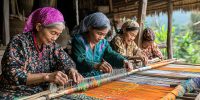
The product portfolio planned in the first phase includes Honey, Sesame Oil, Bird’s Eye Chilli and Handloom Products.
These products represent different forms of rural enterprise—from traditional handloom weaving to food and agricultural products.
Women-led agricultural enterprise
Bird’s Eye Chilli will be sourced from Ropuiliani Women Farmer Producer Company Limited (WFPCL). The organization operates across 154 villages, 16 blocks and 7 districts, with 10,138 farmer members. Its procurement network includes 45 Digital Commodity Collection Centres (D3Cs) managed by trained Community Resource Persons known as Sanchalikas.
The structured procurement system moves from farmers to D3C aggregation, processing, quality checking and bulk marketing. This creates an organized route from local farmers to larger markets.
Enterprise across different communities
The SELHEL product ecosystem also includes sesame oil sourced from Lungsen, Darlawn and Khawzawl RD Blocks. Sesame seeds are sourced locally and from nearby villages, with oil extracted using machines at CHCs, followed by filtering, resting and bottling for sale.
Honey is sourced from the Khawbung Honey Cluster in Champhai District, where approximately 250 producers across 25 villages participate in household-based beekeeping. Producers use both traditional and modern methods, with an average of 4–7 beehives per household and honey harvested several times a year depending on the method.
Creating a sustainable future
SELHEL’s approach is designed to provide different products with appropriate market positioning. Bird’s Eye Chilli and Honey are planned for the Mass to Mid market, while Handloom and Sesame Oil are positioned in the Mid to Premium segment because of their craftsmanship, cultural significance, processing and value.
Through this model, SELHEL connects local skills, women-led institutions, rural producers and organized markets.
The journey of SELHEL is ultimately a journey of people turning skills and local resources into enterprises, livelihoods and opportunities for a stronger rural economy.